
Coleman’s Landing
A landscape-led village vision for Bedford and Trimble County.
Coleman's Landing is a vision for a new rural village on the edge of Bedford, Kentucky. Set on a former farm site with a brownfield reuse context, the project brings together homes, trails, local businesses, care, senior living, public gathering spaces, and preserved open land.
Yard & Co. helped turn a large and complex redevelopment opportunity into a clear, public-facing place vision. The work combined planning, development strategy, brand identity, website design, renderings, and economic impact storytelling to help people understand what the site could become and why it matters for Trimble County.
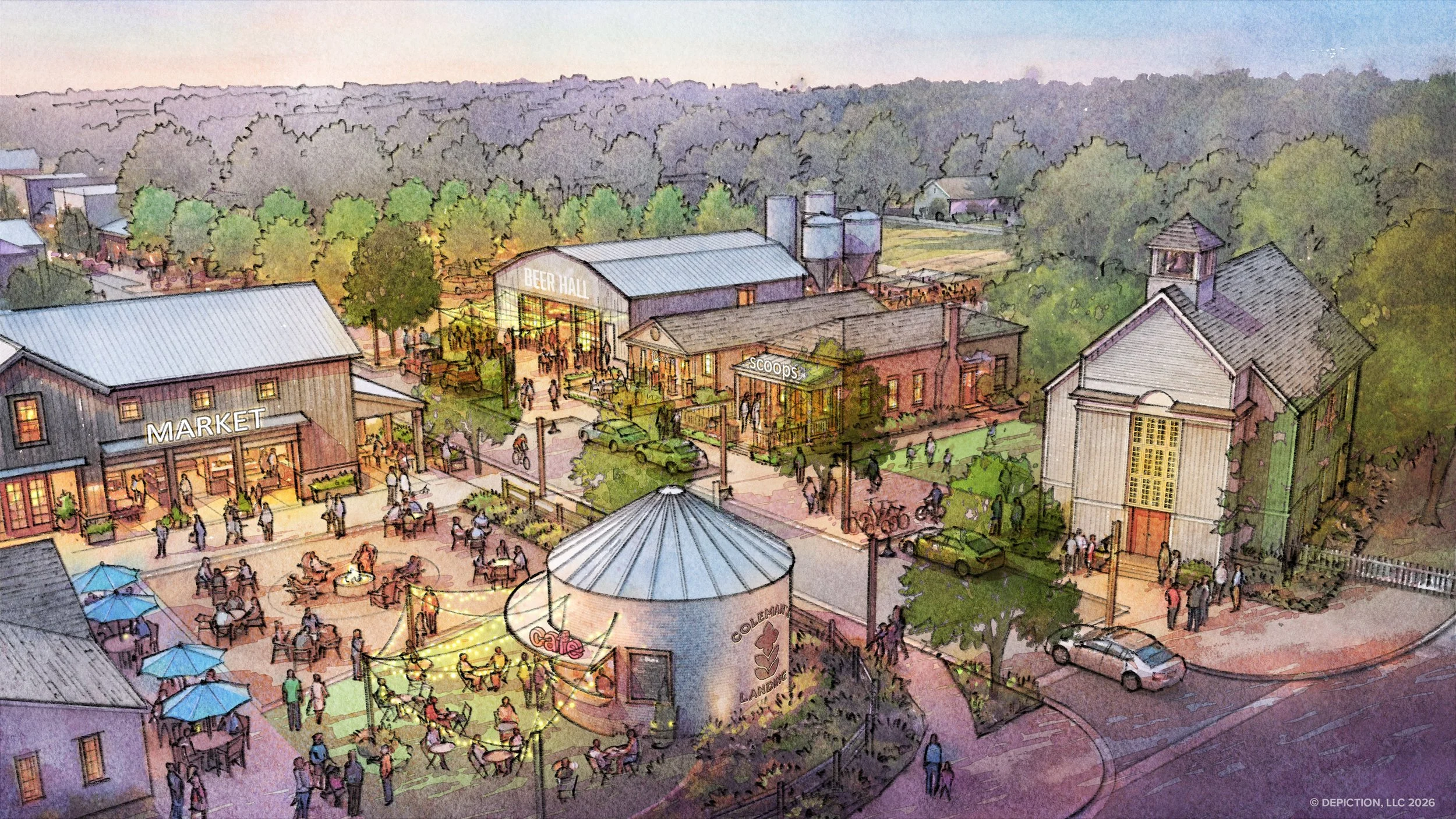
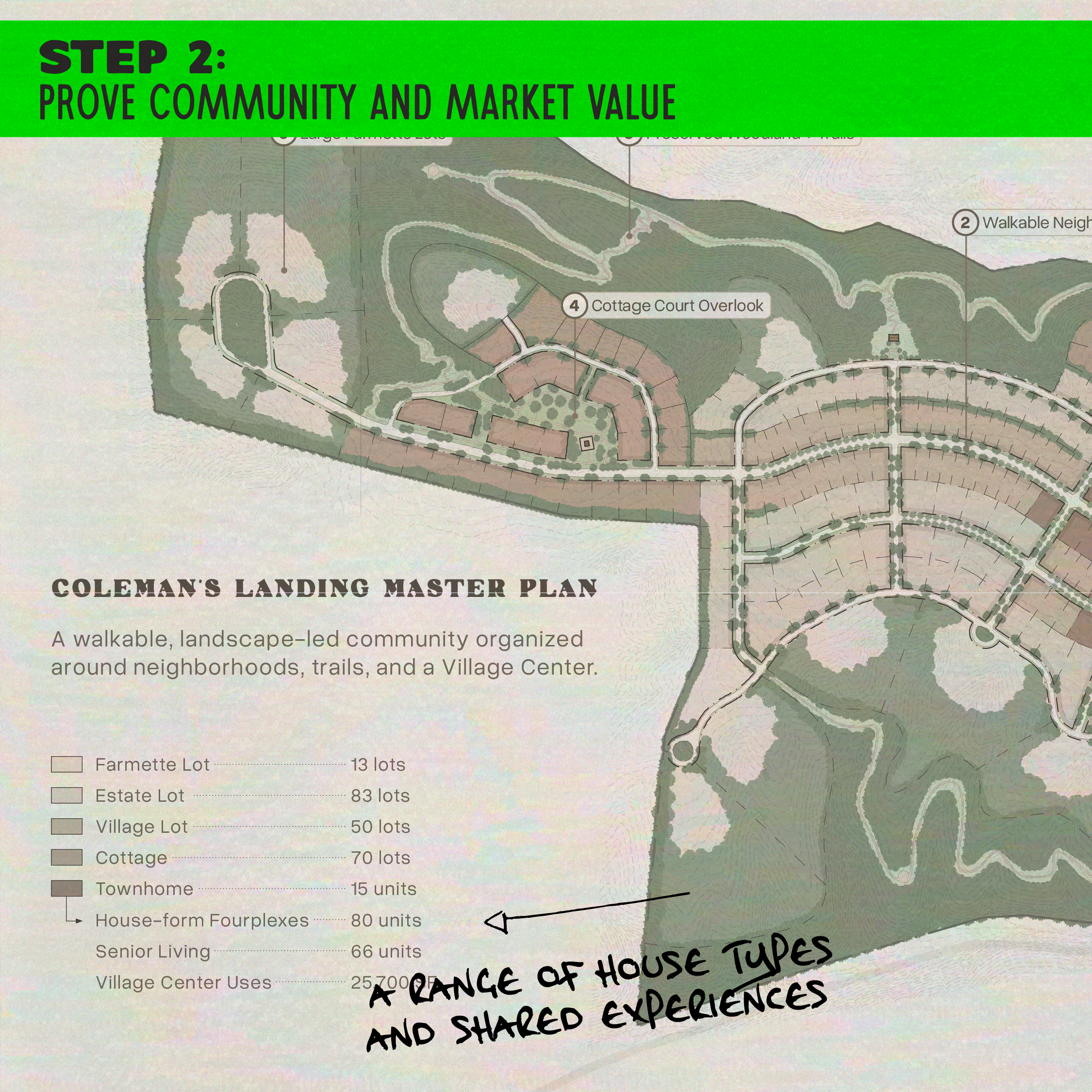
Rather than approaching the land as a conventional subdivision, the Coleman’s Landing plan was shaped around the landscape itself. A new village Center near Main Street creates a front door for the project, while connected neighborhoods, trails, cottage courts, farmette lots, overlooks, and preserved woodland extend into the hills and open spaces of the site.
The result is a vision for growth that feels local, practical, and rooted in the character of Bedford.
Services
Planning, Development Strategy, Brand Identity, Website, Renderings, Economic Impact Storytelling
Timeframe
Spring 2026
Location
Bedford, Kentucky
Client
Atlas & Trimble County
A new kind of growth for Bedford
Coleman’s Landing began with a question that many rural communities face: how can a place grow without losing what makes it feel like itself?
The site offered a rare opportunity. Its size, location, and landscape could support new housing, jobs, public space, and local services. But the vision needed to be easy to understand and grounded in the values of Bedford and Trimble County. A project of this scale could have felt unfamiliar or out of step with the community if it was presented only as a development program.
Yard’s role was to make the future feel visible, local, and possible.
Designing around the land
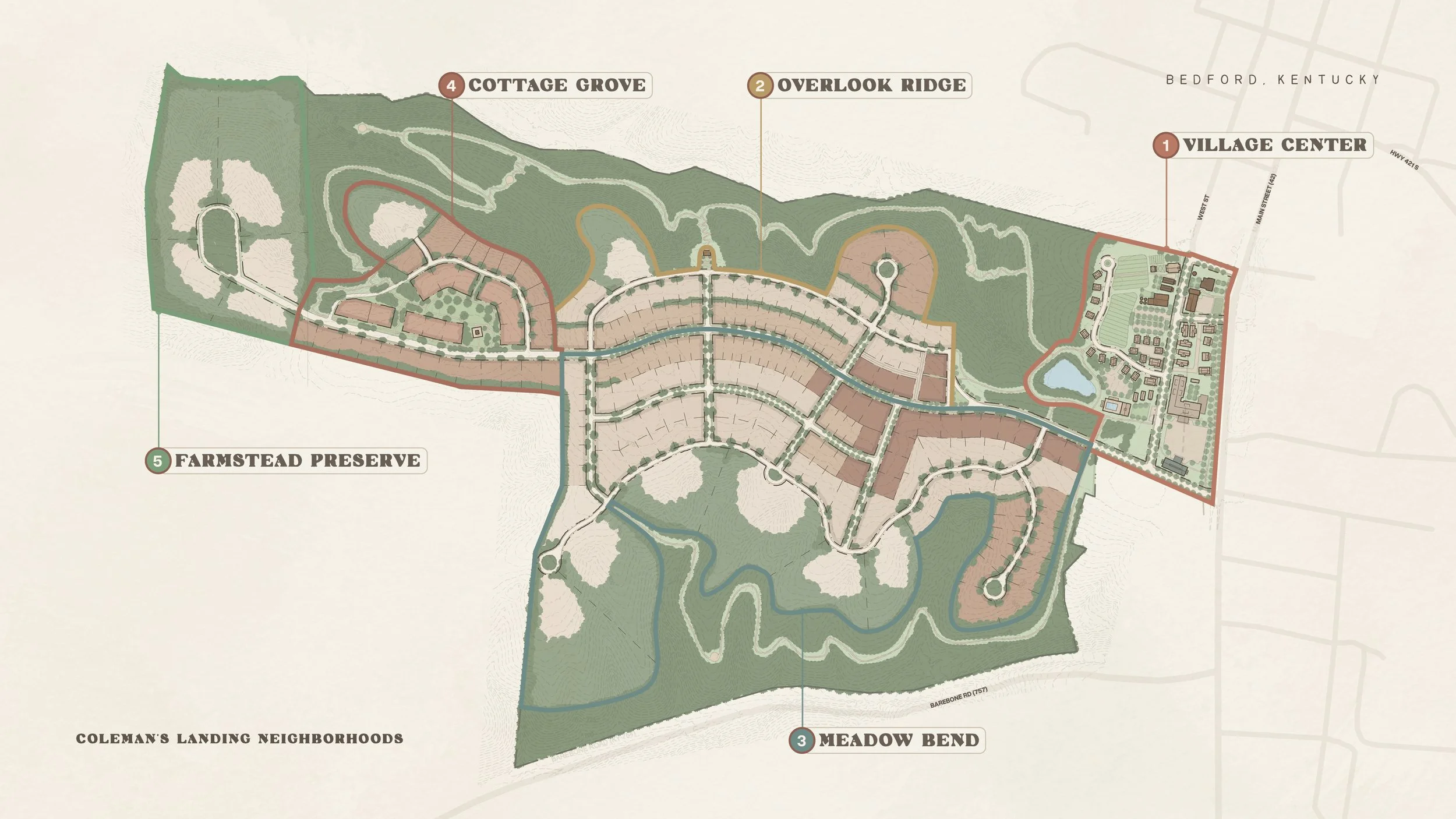
The Coleman’s Landing master plan organizes the site as a connected village, with the most active uses located near Main Street and quieter residential areas extending into the landscape.
The plan includes a Village Center, walkable neighborhoods, preserved woodland, public trails, cottage courts, large farmette lots, senior living and care, and a mix of housing types. Streets and trails are arranged to connect people back to gathering spaces, overlooks, open land, and local services.
The design approach was intentionally context-sensitive. The goal was not to flatten the land into a generic pattern of growth, but to let the site’s wooded hills, open spaces, and rural setting shape the land. Coleman’s Landing needed to feel like it belonged in Bedford from the beginning.
Giving the place a story.
A strong plan was only part of the work. Coleman’s Landing also needed a story people could quickly understand.
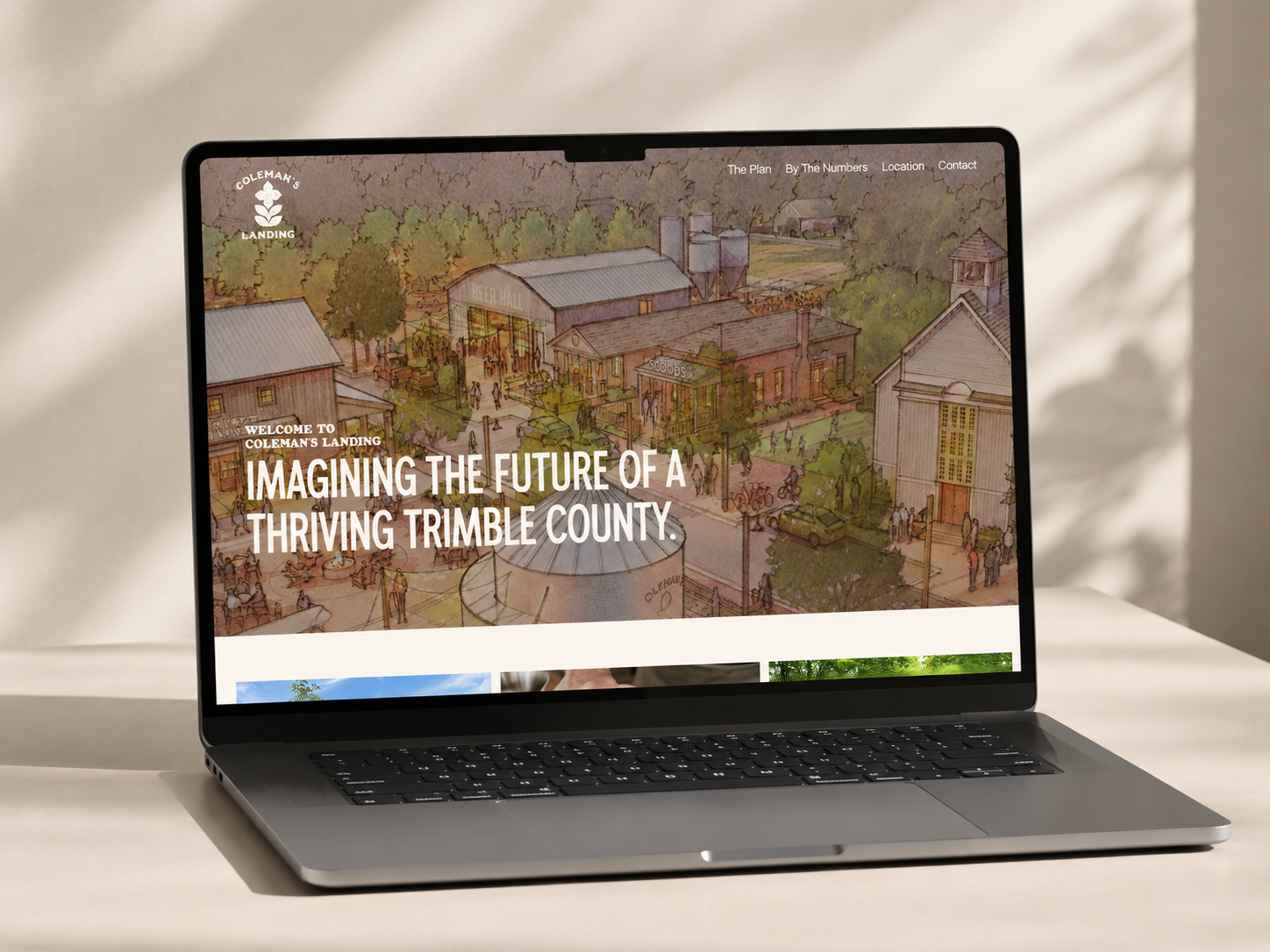
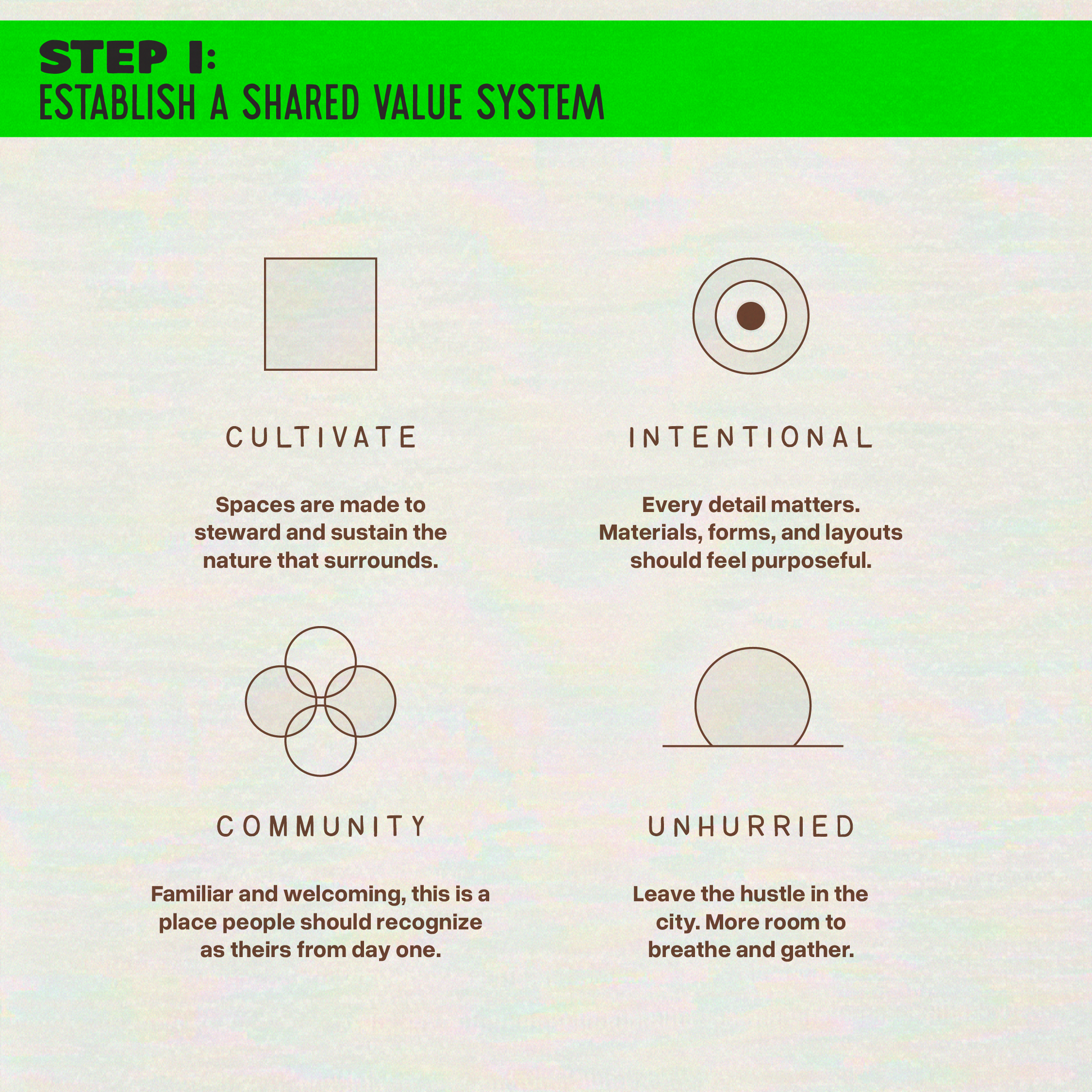
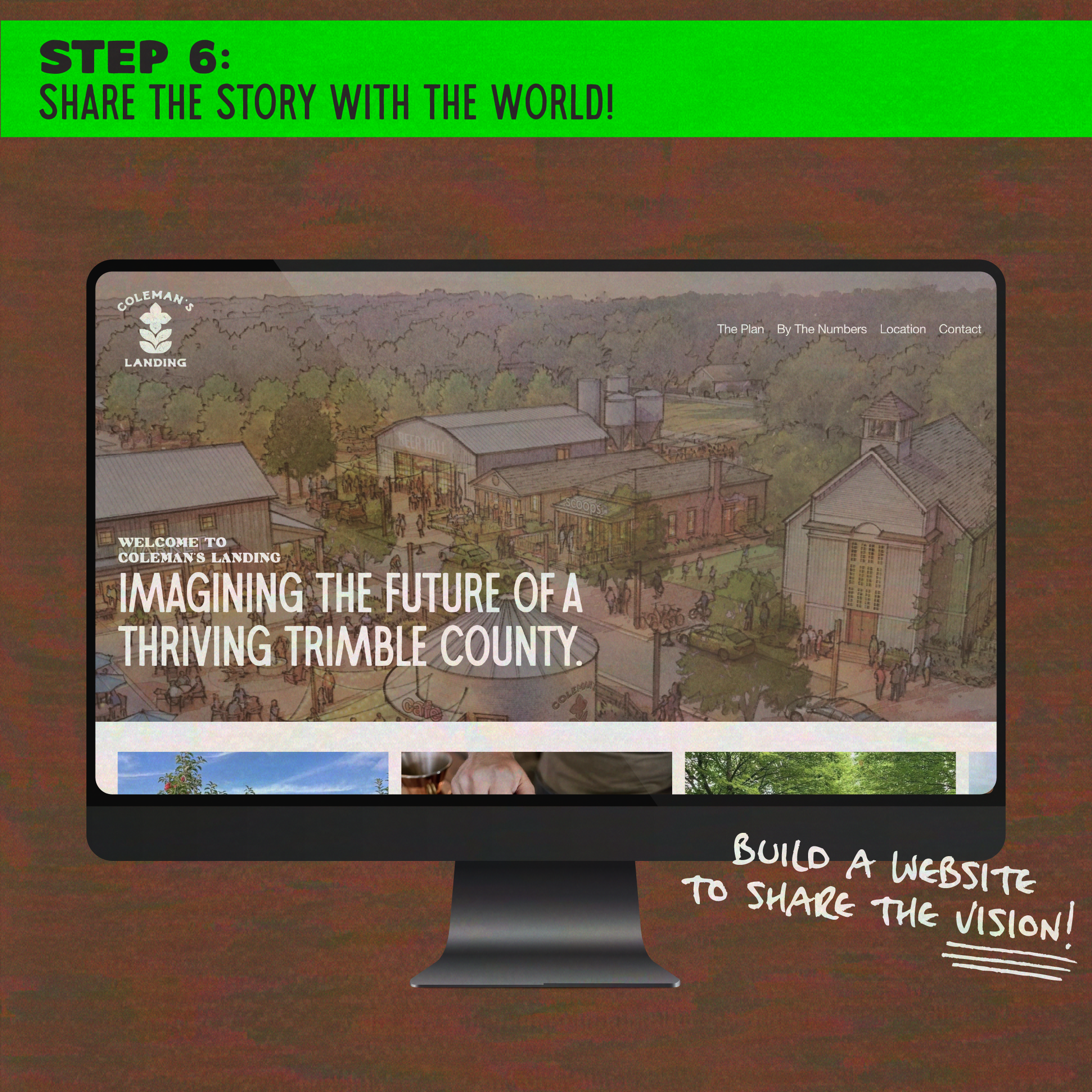
Yard developed a complete public-facing identity for the project, including the name, brand system, illustrative plan, website, one-pager, and supporting visual materials. The brand was built around a warm, rural village character: familiar, intentional, community-minded, and unhurried.
That identity helped connect the physical plan to a larger promise. Coleman’s Landing was not only about new homes. It was about creating a place where people could put down roots, age near family, find work close to home, walk through the landscape, gather with neighbors, and welcome visitors into rural Kentucky.
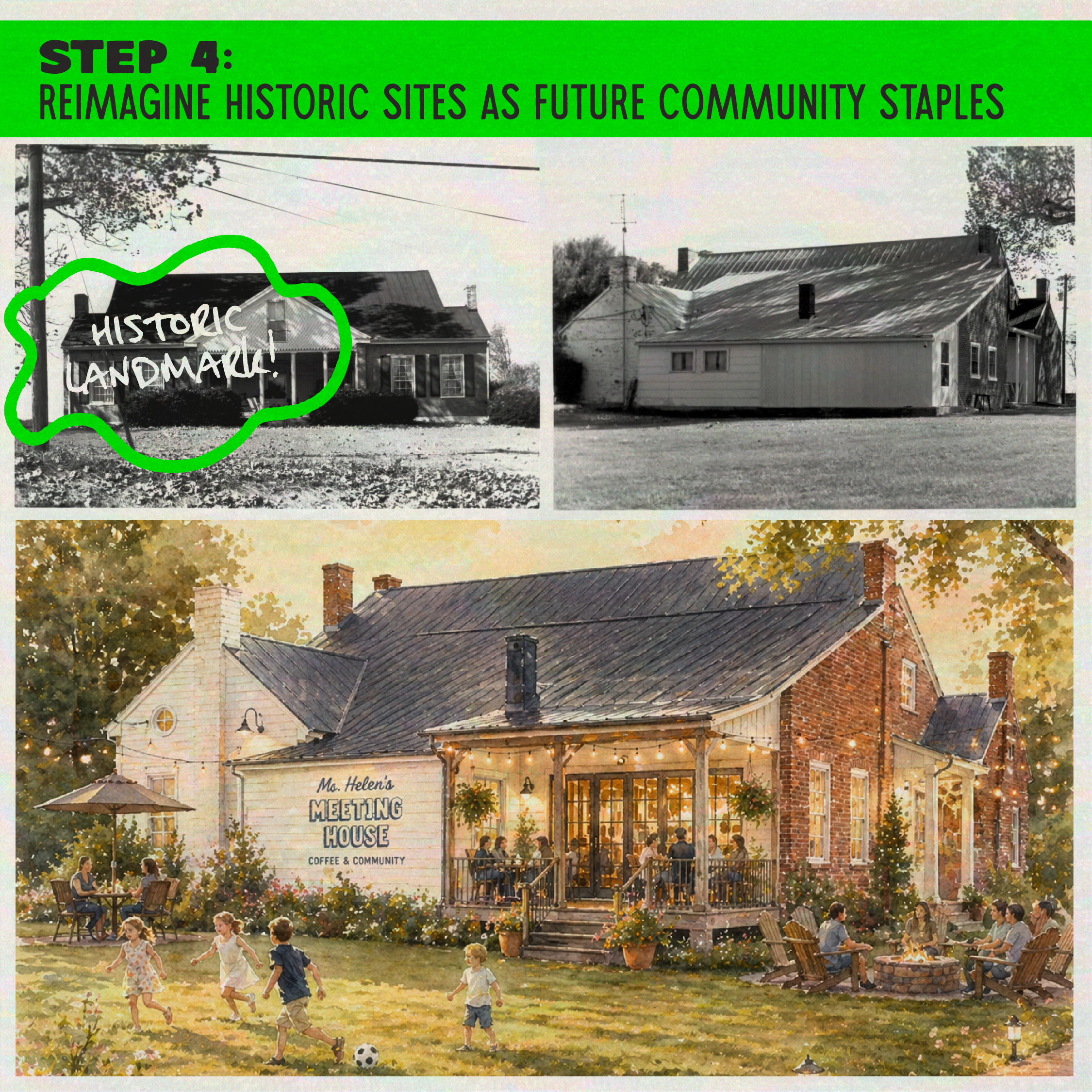
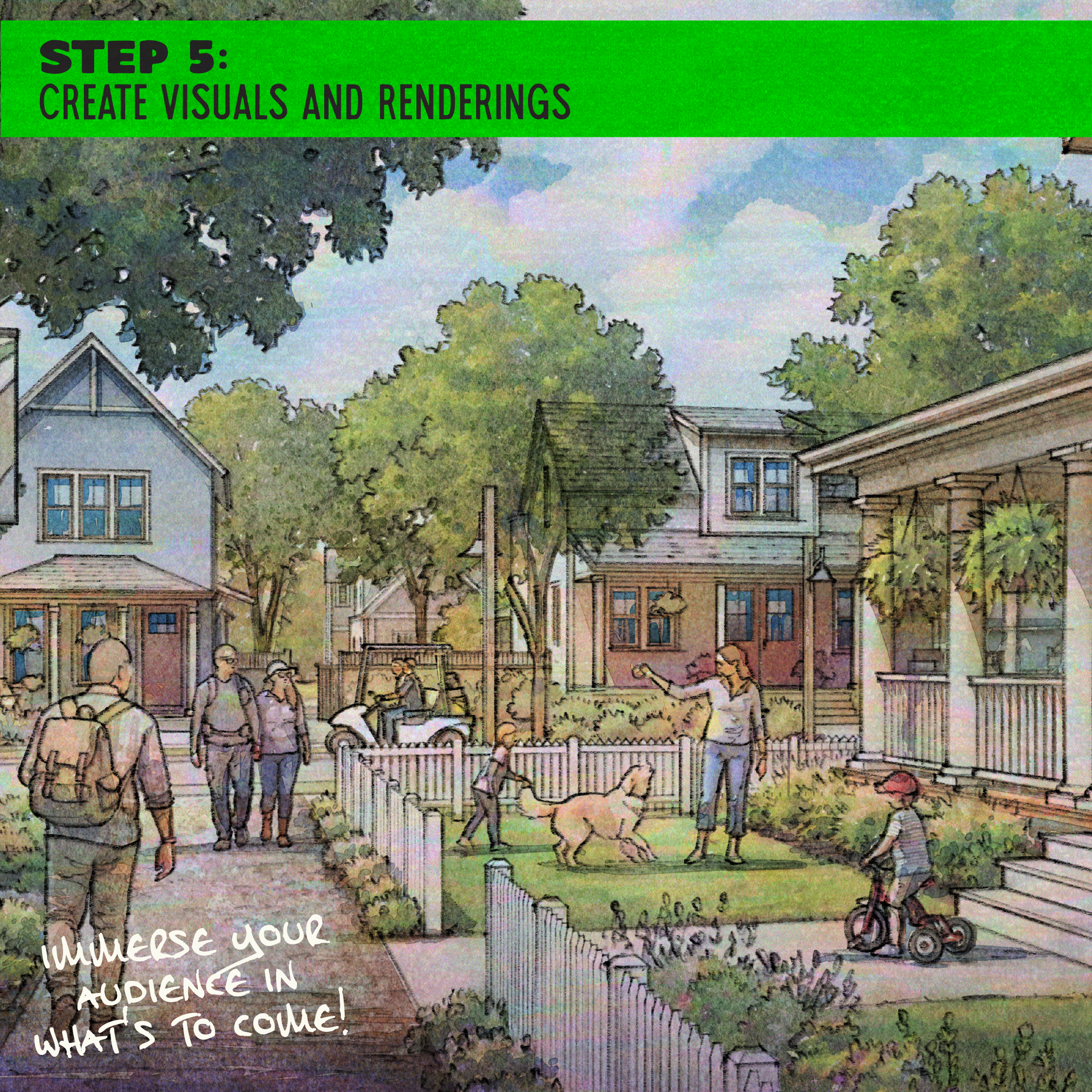
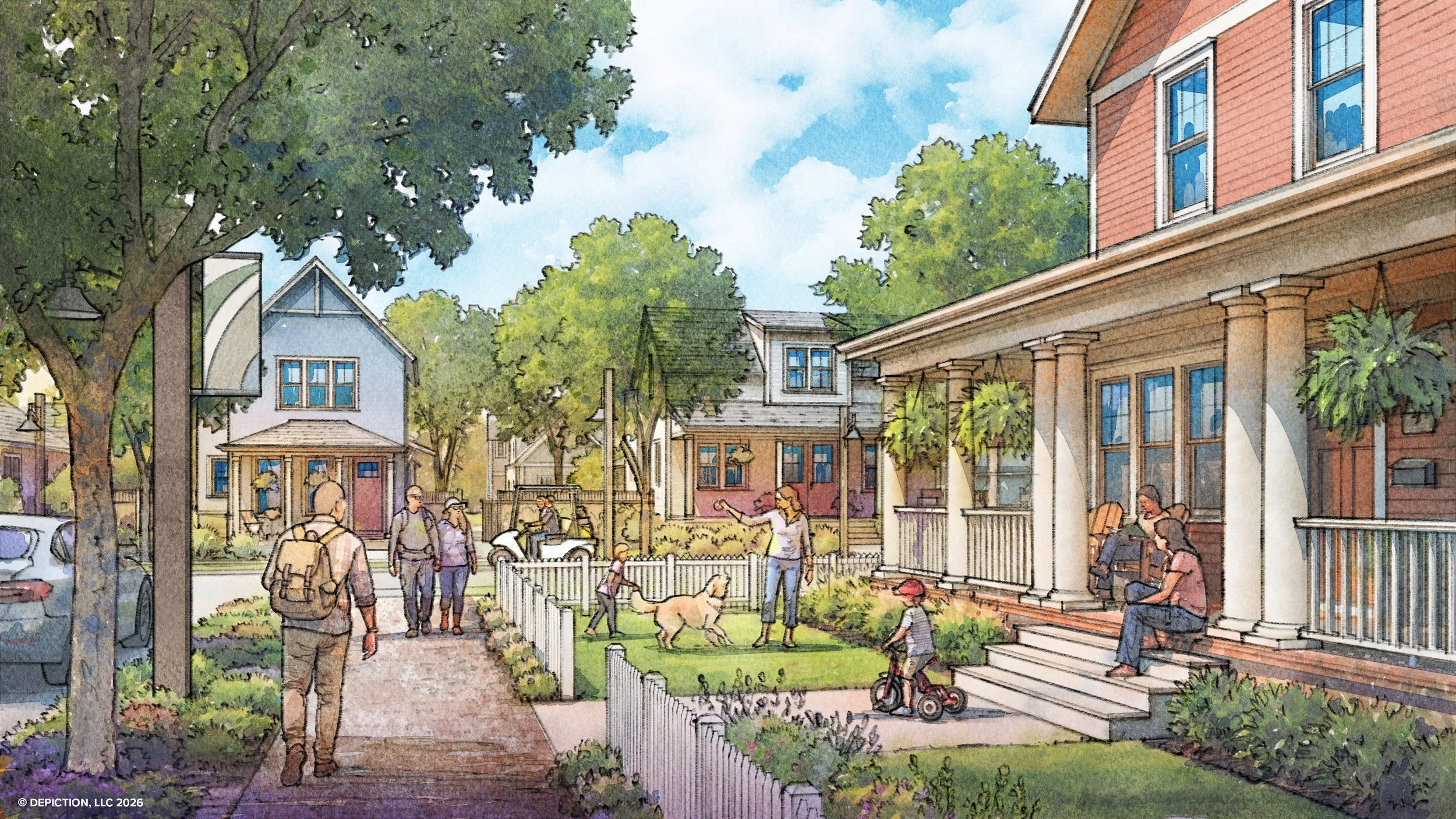
The renderings and illustrative master plan played a central role in that story. They helped translate planning-level ideas into scenes people could picture: a lively Village Center, porch-forward neighborhoods, trails through preserved land, and public spaces shaped for everyday gathering.


Project Impact
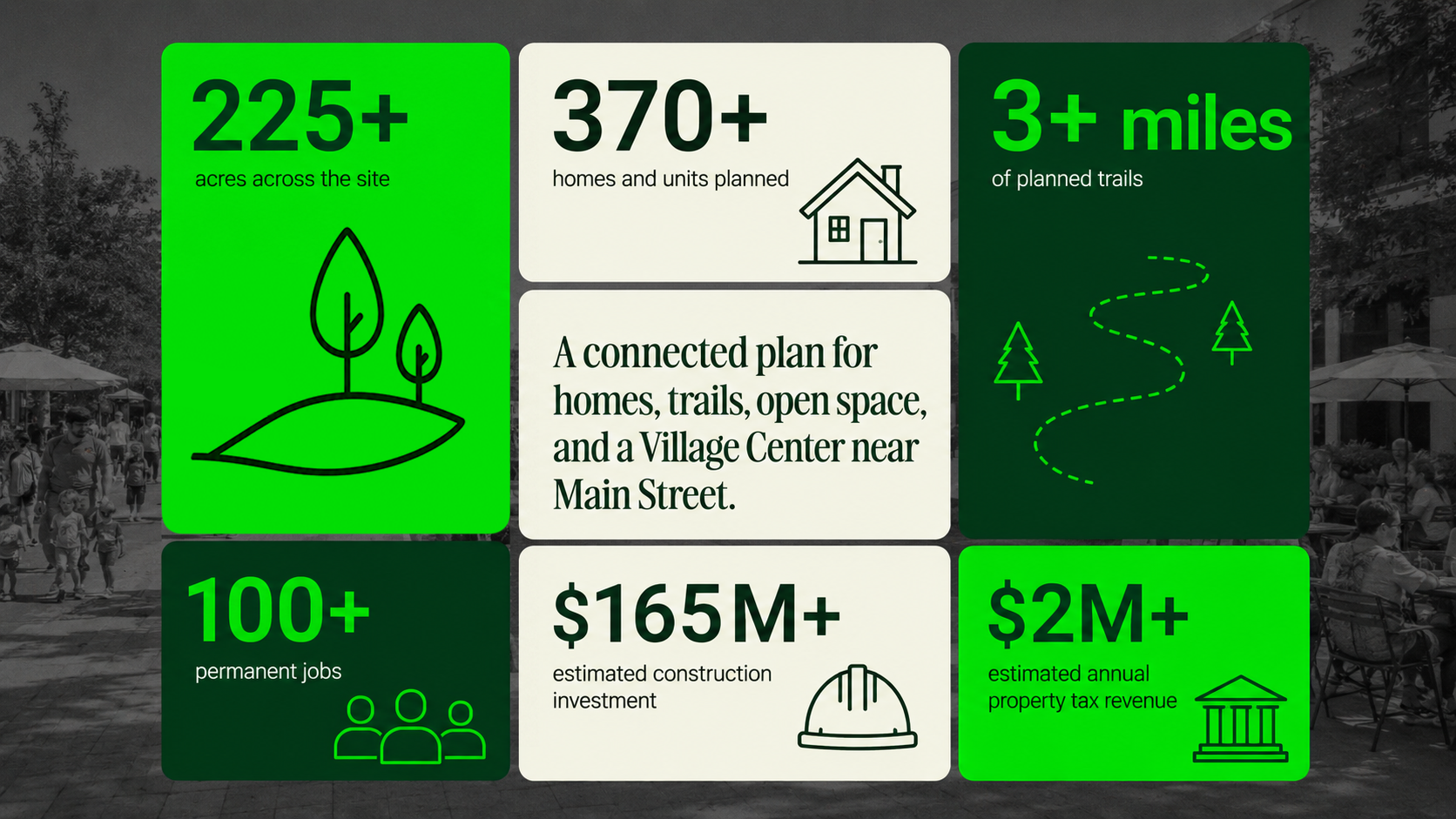
Coleman’s Landing helped turn a complex redevelopment opportunity into a clear and compelling vision for rural growth.
Through planning, branding, visual storytelling, and economic impact communication, Yard helped make the project feel more grounded, more understandable, and more connected to the place it serves. The work gave Bedford and Trimble County a shared picture of what the site could become: a landscape-led village with homes, trails, jobs, care, and public gathering spaces shaped around the land.